
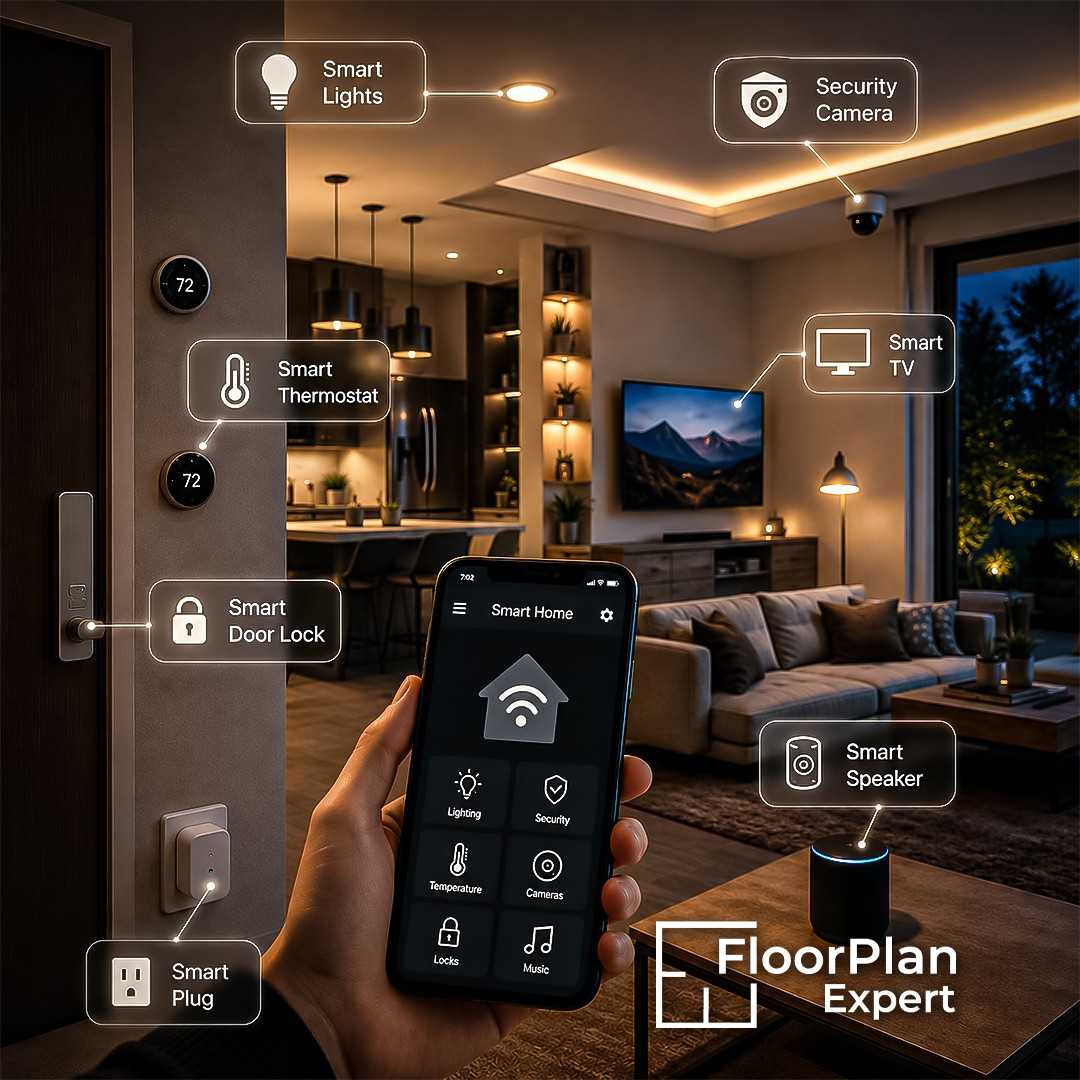
Not long ago, smart home technology was seen as something reserved for luxury properties or people with a strong interest in technology. Today, that’s no longer the case. A wide range of smart devices has become more affordable, easier to install, and simple to manage using smartphone apps or voice assistants, making them accessible to everyday homeowners.
Popular upgrades now include:
- Smart lighting.
- Heating controls.
- Video doorbells.
- Security cameras.
- Smart plugs.
- Voice assistants.
One of the biggest challenges with smart home ideas is deciding which upgrades are worth installing first. Instead of trying to automate your entire home at once, it’s often better to begin with the features that deliver the greatest everyday convenience, improved comfort, and long-term energy savings. Starting small makes it easier to build a smart home that suits your lifestyle and budget.
Many homeowners put off exploring smart home ideas because the wide range of devices and brands can feel overwhelming. With so many options available, it can be difficult to know where to begin or which products are worth investing in.
Common concerns include:
- Which devices work together?
- Which brands are compatible?
- Will everything become outdated quickly?
- Is professional installation required?
- Which upgrades actually save money?
Starting with a small number of carefully selected devices makes the process much more manageable. It allows homeowners to build confidence, understand how smart technology fits into their daily routine, and gradually expand into a fully connected home at their own pace.
Smart Lighting
Lighting is often the easiest place to begin when exploring smart home ideas because it usually involves replacing existing bulbs or switches with smart alternatives. Setup is straightforward, and once connected, the system can be controlled through a smartphone, voice assistant, or automated schedules, making everyday living more convenient with minimal effort.
When it comes to smart home ideas, smart lighting is often the easiest and most affordable place to start. It requires minimal investment, is simple to install, and delivers noticeable improvements in convenience from day one without the complexity of larger home automation systems.
Popular features include:
- Dimming controls.
- Colour temperature adjustment.
- Scheduled lighting.
- Motion activation.
- Remote operation.
These features make everyday living more convenient while requiring little or no modification to your home’s existing electrical system.
Smart lighting can help reduce energy use by ensuring lights are only on when they’re actually needed. Scheduled lighting follows set routines, while motion sensors automatically switch lights off when a room is unoccupied, helping households save electricity without relying on manual switches.
Motion sensors are especially useful in:
- Hallways.
- Bathrooms.
- Utility rooms.
- Garages.
- Outdoor entrances.
By automating everyday lighting, these smart home ideas improve convenience while reducing unnecessary energy consumption and lowering electricity bills over time.
Smart Heating and Thermostat Control
Heating makes up a large share of household energy use in the UK, making smart heating systems one of the most worthwhile smart home automation UK upgrades. Instead of relying on fixed schedules, modern smart thermostats learn your daily routine and automatically adjust heating to improve comfort while reducing unnecessary energy use.
With energy prices continuing to rise, smart heating control has become one of the most popular smart home automation UK upgrades. It offers an easy way to improve comfort while helping reduce unnecessary heating costs through greater control and automation.
Smart thermostats allow homeowners to:
- Adjust temperatures remotely.
- Heat individual zones.
- Create personalised schedules.
- Monitor energy usage.
- Reduce heating while the house is empty.
This level of control helps keep homes comfortable while using energy more efficiently, making it one of the most practical smart home investments for UK households.
Smart Security
Home security is one of the main reasons homeowners invest in smart home ideas. Connected security devices allow you to monitor and manage your property in real time, giving you greater peace of mind whether you’re at home, at work, or away on holiday.
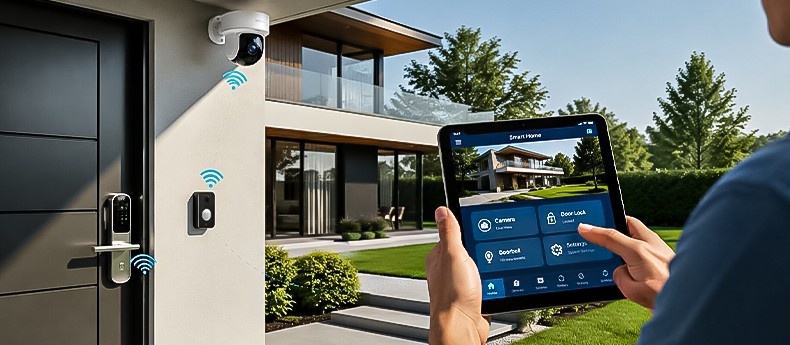
Video doorbells are among the most popular smart home ideas because they combine everyday convenience with enhanced home security. They let homeowners see who’s at the door, monitor deliveries, and stay connected to their property wherever they are.
Key benefits include:
- Live video viewing.
- Motion detection.
- Visitor recording.
- Package monitoring.
- Smartphone notifications.
Outdoor security cameras add another layer of protection by keeping an eye on entrances, driveways, and gardens around the clock, helping homeowners feel more secure both at home and away.
Home Automation System
While individual smart devices are useful on their own, their real value comes from working together through a central home automation system. Instead of managing separate apps for lighting, heating, and security, homeowners can control everything from a single platform, making everyday home management simpler and more efficient.
A home automation system brings individual smart devices together, allowing them to work as one connected network instead of operating separately. This means multiple actions can happen automatically with a single routine, making everyday tasks easier and improving the overall efficiency of your home.
For example:
- Lights switch off when you leave.
- Heating adjusts automatically.
- Doors lock.
- Security cameras activate.
- Alarm systems arm.
These automated routines reduce repetitive tasks while creating a smarter and more convenient living environment.
One of the most important parts of smart home automation UK is choosing devices that are compatible from the start. Before buying new equipment, it’s worth checking whether it works with platforms such as Google Home, Amazon Alexa, or Apple HomeKit. Building your smart home around a single ecosystem makes future upgrades simpler and helps avoid compatibility issues later on.
Smart Plugs and Energy Monitoring
You don’t need to replace your existing appliances to start enjoying the benefits of smart home ideas. Smart plugs are one of the simplest and most cost-effective ways to add automation to almost any home. They allow everyday appliances to become smarter, making it easier to manage energy use while improving convenience with minimal setup.
Smart plugs sit between a standard socket and your appliance, letting you control it remotely without replacing the equipment itself.
They work particularly well with:
- Lamps.
- Coffee machines.
- Fans.
- Electric heaters.
- Phone chargers.
Their simple setup and flexibility make smart plugs one of the most practical and affordable ways to introduce smart home ideas.
Smart Appliances - Kitchen and Laundry
Smart appliances are becoming more common in UK homes as homeowners look for easier ways to manage everyday tasks and reduce energy use. Modern kitchen and laundry appliances can connect to smartphones, allowing users to monitor, schedule, and control them remotely.
For households investing in smart home automation UK, connected appliances are a natural next step after smart lighting and heating controls. Beyond remote operation, these appliances can optimise performance, provide maintenance alerts, and help minimise unnecessary energy consumption.
Many UK energy suppliers offer time-of-use tariffs, with electricity available at lower rates during certain hours. Smart appliances can be scheduled to run during these cheaper periods, helping homeowners reduce electricity costs without having to remember when to switch appliances on.
When connected to a home automation system, appliances can also work with energy monitoring devices to manage and optimise electricity use across the home.
Voice Control and Smart Speakers
Voice assistants have become a convenient control hub for many connected homes. Instead of switching between different smartphone apps, homeowners can use simple voice commands to manage lighting, heating, entertainment, and security devices.
For many households, voice control makes smart home ideas feel simpler, faster, and more effortless.
Smart speakers bring multiple connected devices together through one simple control point, making it easier to manage different parts of the home.
Common voice commands include:
- Turn lights on or off.
- Adjust room temperature.
- Lock doors.
- Play music.
- Check weather forecasts.
- Set reminders.
- Start appliance routines.
As more manufacturers adopt widely used voice platforms, compatibility between different smart devices is also becoming easier.
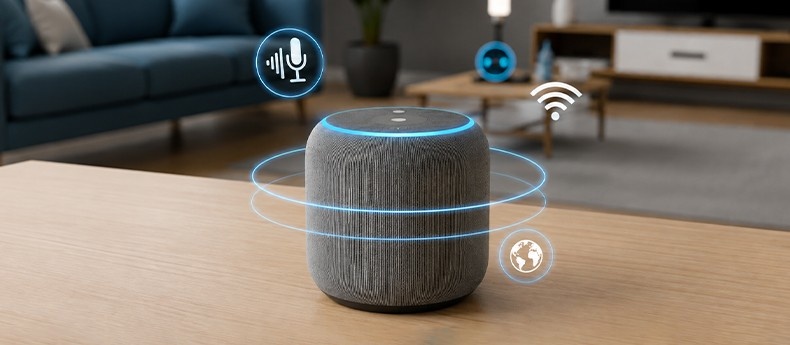
Voice assistants become even more useful when paired with automation routines. A simple command such as “Goodnight” can trigger several actions at once:
- Lock external doors.
- Switch off downstairs lights.
- Lower heating.
- Activate security cameras.
- Close smart blinds.
Instead of controlling each device separately, homeowners can manage complete routines with one simple voice command.
Smart Home Ideas for Better Sleep and Wellbeing
While convenience and energy efficiency often lead the conversation, many smart home ideas are also designed to support better health and wellbeing. Factors such as lighting, temperature, and indoor conditions can influence sleep quality, concentration, and overall comfort throughout the day.
Good sleep is easier to maintain when the bedroom environment stays consistent and comfortable.
Connected devices can automatically:
- Lower bedroom temperatures before bedtime.
- Gradually dim lighting during the evening.
- Close blinds at sunset.
- Reduce external noise with smart white-noise devices.
- Open blinds naturally in the morning.
These simple adjustments support more consistent sleep routines without requiring homeowners to manage each setting manually every day.
Planning Smart Home Ideas Into a New Build or Extension
Although retrofitting smart devices into an existing property is now easier, integrating them during a new build or renovation is usually more cost-effective. Planning smart home ideas from the beginning allows electrical infrastructure, networking, and device locations to be considered before the walls are finished, avoiding unnecessary changes later.
Planning smart technology from the outset allows homeowners to create an integrated home automation system instead of adding separate, disconnected devices over time.
This approach offers several long-term advantages:
- Better compatibility.
- Cleaner installations.
- Easier maintenance.
- Greater flexibility for future upgrades.
- Lower overall installation costs.
Whether you’re building a new home or extending an existing property, planning smart technology alongside the architectural drawings creates a more efficient, connected, and future-ready home.
Conclusion
Modern smart home ideas are no longer something reserved for luxury properties or technology enthusiasts. Affordable options such as smart lighting, heating controls, security systems, and connected appliances now allow almost any homeowner to improve convenience, security, and energy efficiency. Starting with a few simple upgrades lets households enjoy immediate benefits while gradually creating a connected home that suits their lifestyle.
As smart home automation UK continues to develop, the biggest benefits come from planning the system as a whole rather than simply buying individual gadgets. A well-planned home automation system allows lighting, heating, security, and appliances to work together smoothly, creating automated routines that reduce daily effort, improve comfort, and help control long-term running costs. Whether you’re renovating, extending, or planning a new build, introducing smart technology early can prepare your home for both current needs and future developments.
FAQs
What are the best smart home ideas for beginners?
Smart lighting, smart plugs, and video doorbells are ideal starting points because they are affordable, easy to install, and can quickly improve everyday convenience and home security.
Is smart home automation worth it in the UK?
Yes. Smart home automation UK can help lower energy use, strengthen home security, improve comfort, and make everyday household tasks easier, particularly with ongoing energy costs.
What is a home automation system?
A home automation system brings different smart devices together on one platform, allowing lighting, heating, security, and appliances to communicate and operate through automated routines or voice commands.
Can smart home devices save money?
Many smart devices can reduce energy consumption through scheduled operation, occupancy detection, intelligent heating controls, and appliance monitoring. Over time, these features can help reduce electricity and heating costs.
Should I install smart home technology during a renovation?
Yes. Adding smart technology during a renovation or extension is generally more cost-effective than installing it later. Wiring, networking, and device locations can be planned alongside the overall design from the beginning.


