

Why "DIY vs Professional" Isn't a One-Size-Fits-All Decision?
The choice between DIY and professional work depends on the project’s complexity, your skills, available time, and budget. Simple cosmetic changes may be suitable for DIY, while structural, electrical, or specialist work often needs professional expertise. Assessing these factors beforehand can help prevent unnecessary costs, safety risks, and mistakes while achieving the expected results.
Every homeowner wants to improve their property without spending more than necessary. DIY projects can reduce labour costs and offer greater control, while professional work brings experience, specialist tools, and a better understanding of technical requirements.
The right choice depends on the project’s complexity, your skills, available time, budget, and the result you want to achieve. Evaluating these factors early can help you avoid costly mistakes and choose the approach that makes the most practical sense.
Before starting any project, take a moment to ask yourself:
- Have I completed similar work before?
- Do I fully understand the potential risks?
- Do I have the right tools and equipment?
- Could mistakes lead to costly repairs?
- Does the work need approval, inspection, or certification?
- How much time can I realistically dedicate?
- Could poor workmanship reduce the home’s value?
If several answers raise concerns, seeking professional advice before picking up the toolbox could save significant time, money, and frustration. It can also help you understand the project’s requirements and avoid problems that may be difficult or expensive to correct later.
The Case for DIY Home Improvement
DIY can be a great choice for homeowners who have the right skills, time, and confidence for the job. Along with reducing labour costs, doing the work yourself gives you more control over the project’s pace, materials, design choices, and finished result.
However, DIY doesn’t automatically mean lower costs. Mistakes, wasted materials, specialist tools, and unexpected repairs can quickly increase the overall expense.
The main appeal of DIY home improvement is avoiding professional labour costs. If you already have the right tools and skills, completing a straightforward project yourself can reduce the overall expense considerably. However, beginners often underestimate the additional costs involved.
A project may require:
- Specialist tools.
- Protective equipment.
- Materials that cannot be reused.
- Waste disposal.
- Extra materials to fix mistakes.
Your time also has a value. Spending three weekends fixing an avoidable error may not be more economical than hiring a professional who could complete the same work correctly in a day. DIY is only truly cost-effective when the savings outweigh the time, tools, materials, and potential mistakes involved.
The internet has made DIY home improvement knowledge easier to access, but following an online tutorial doesn’t necessarily replace hands-on experience. Before starting, make sure you understand:
- The correct order of the work.
- How to use the required tools safely.
- Which materials work together.
- How to spot hidden problems.
- When it’s better to stop and seek professional help.
For simple decorative projects, the learning curve may be relatively easy to manage. Technical or complex work can require considerably more knowledge, preparation, and practical experience.
Some home improvement tasks are better suited to beginners and offer a simple way to build confidence and practical DIY skills. Good starting points include:
- Painting and decorating.
- Hanging pictures and shelves.
- Assembling furniture.
- Replacing cabinet handles.
- Simple garden maintenance.
- Basic cosmetic repairs.
These projects are relatively low-risk and usually allow mistakes to be fixed without affecting the home’s structure or essential services. They also help beginners gain experience before taking on more demanding DIY home improvement work.
When Professional Home Improvement Services Make More Sense

At some stage, avoiding labour costs is no longer worth the risks that come with doing the work yourself. Professional home improvement services become the safer and more practical choice when mistakes could have serious consequences.
This is especially important for work involving structural stability, electrical systems, gas, plumbing and potential water damage, as well as projects that must meet specific building regulations or compliance requirements.
Some home improvement projects are better left to qualified professionals from the start, particularly when mistakes could create safety, structural or compliance issues.
Examples include:
- Structural alterations.
- Major electrical work.
- Gas-related work.
- Roof alterations.
- Extensions.
- Significant plumbing changes.
- Work involving complex building regulations.
UK government guidance confirms that certain alterations and installations fall under Building Regulations, including heating systems, fuse boxes, bathrooms and electrical work around baths or showers.
Gas work is another area where professional expertise is essential. Citizens Advice recommends using a Gas Safe registered engineer for gas-related work and a suitably qualified or registered electrician for electrical work.
The most serious DIY mistakes are not always obvious straight away. Work that appears fine initially can create bigger problems later if it is completed incorrectly.
Incorrect work can lead to:
- Water damage.
- Electrical hazards.
- Structural problems.
- Poor insulation or energy performance.
- Failed inspections.
- Expensive remedial work.
Health and safety also need careful consideration. The Health and Safety Executive stresses the importance of having suitable skills, knowledge, experience and planning for construction work, with the level of planning matched to the project’s complexity and potential risks.
In some situations, paying for professional expertise isn’t an unnecessary cost. It can be a practical investment that prevents a much more expensive problem later.
Comparing Cost, Time, and Quality Side by Side
The most useful DIY vs professional comparison goes beyond the initial price. Labour costs matter, but so do the time involved, tools required, potential risks and the quality of the finished work.
Factor | DIY | Professional |
Labour cost | Lower or none | Higher |
Learning required | May require research and practice | Skills and training already in place |
Completion time | Often takes longer | Usually completed more efficiently |
Tools | May need to be purchased or hired | Usually already available |
Risk of mistakes | Higher, especially for complex work | Generally lower |
Material waste | Mistakes may increase material costs | Usually better material planning |
Quality | Depends on your experience | Usually more consistent |
Control | Full control over the process | Less direct control |
Flexibility | Can work around your schedule | Based on professional availability |
Certification | Your responsibility where required | May be covered through appropriate schemes |
Problem-solving | You handle unexpected issues | Professional experience can help resolve issues |
Long-term value | Can be cost-effective for suitable projects | May offer greater value for complex work |
Professional quotes can seem costly at first because they cover more than labour. They may include overheads, insurance, equipment, expertise and other business expenses.
DIY can remove much of the labour cost, but a fair comparison should account for every DIY expense, including tools, materials, and your time. Ask professionals for detailed quotes and compare them with the complete DIY budget rather than looking at labour alone.
Citizens Advice recommends getting multiple quotes before choosing a trader and checking insurance and contractual arrangements before the work starts.
A professional may finish a project within a few days, while the same work could take a homeowner several weekends. That doesn’t automatically make professional work the better choice. If you enjoy DIY and have enough free time, taking longer may be completely reasonable.
However, the time involved becomes more important when you’re left without a usable kitchen, bathroom or bedroom for several weeks. In those situations, the disruption can make professional help more practical.
The quality and lifespan of the finished work depend more on the person’s skill and execution than on whether the project is DIY or professionally handled.
An experienced homeowner can achieve excellent results when tackling a project that matches their abilities. On the other hand, hiring a contractor doesn’t automatically guarantee quality if the wrong professional is chosen.
The key is to match the complexity of the project with the person’s knowledge, experience, and practical ability.
Permits, Codes, and Legal Considerations
This is one area where homeowners should avoid making assumptions and check the requirements before starting work.
Planning permission and Building Regulations are separate requirements. GOV.UK explains that planning permission determines whether proposed development is allowed, while Building Regulations focus on whether the construction work meets the required safety and performance standards.
Understanding which requirements apply to your project can help prevent delays, compliance issues, and unexpected costs later.
Not every regulated home improvement project requires a specific licence, but some types of work have strict competence, notification, or certification requirements. The exact requirements depend on the work being carried out.
For certain projects, registered tradespeople can work through a Competent Person Scheme and self-certify that their work meets Building Regulations, instead of the homeowner applying for Building Regulations approval themselves.
If you’re unsure whether your project needs approval, certification, or a registered professional, check with the relevant building control body before starting. This can help you avoid compliance problems and unexpected costs later.
Ignoring required approvals can cause problems even after the DIY project is complete. GOV.UK explains that non-compliant work may lead to enforcement action, additional costs to correct defective work, and difficulties obtaining compliance certificates when selling the property.
Planning permission may also apply depending on the project. Some work falls under permitted development rights, while other alterations require formal approval.
The safest approach is straightforward:
Check the requirements before you build, alter, or demolish.
How to Decide: A Practical Framework
Instead of making the decision based on emotion or assumptions, assess the project against three practical factors: complexity, budget and risk. This makes it easier to determine whether DIY is realistic or whether professional help is the more sensible option.
Ask:
Low complexity + low risk:
DIY is often a practical choice.
Medium complexity + manageable risk:
DIY may work, with professional advice where needed.
High complexity + high risk:
Bringing in a professional is usually the safer option.
Then consider your budget alongside the assessment. Even a simple project may be worth outsourcing if your free time is limited. On the other hand, having strong practical skills and plenty of time can make DIY a worthwhile way to reduce costs.
You don’t always have to choose entirely between DIY and professional work. A hybrid approach can be a practical way to manage costs while keeping complex tasks in experienced hands.
For example, you might:
- Plan the room yourself.
- Remove old cosmetic finishes.
- Prepare surfaces.
- Hire professionals for electrical or structural work.
- Handle painting and finishing yourself.
This approach can reduce labour costs while ensuring that specialist work is handled by someone with the right skills and experience.
Finding the Right Professional Home Improvement Services When You Need Them
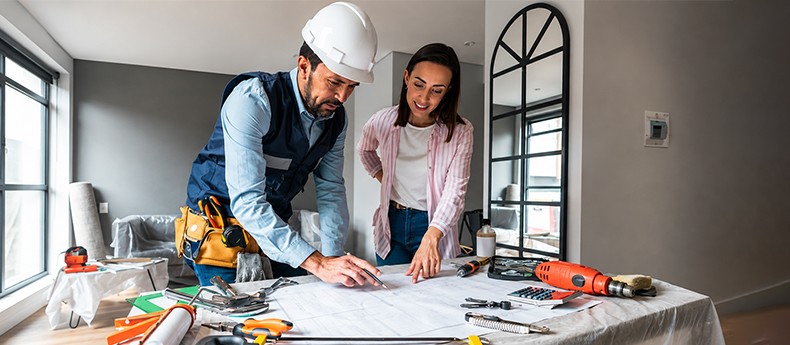
When professional help is necessary, choosing the lowest quote shouldn’t be the only consideration. The right contractor should have the skills required for the project, hold any necessary qualifications, and clearly explain what the work will involve.
Before making a decision, compare quotes, check relevant experience, and make sure you understand what is included. A reliable professional should be able to explain the scope, costs, timescale, and expected outcome clearly.
Before hiring a contractor, check:
- Relevant qualifications and experience.
- Recent examples of similar work.
- References.
- Insurance.
- Appropriate trade or competent-person registration.
- A detailed written quotation.
- A written contract.
- Payment terms.
- Expected completion date.
Citizens Advice recommends checking references, qualifications, insurance and relevant approved-trader or competent-person scheme membership. It also advises having a written contract in place before work begins.
For construction projects, HSE guidance also highlights the importance of choosing contractors with the right skills, knowledge, experience and organisational capability to complete the work safely.
Be cautious if a contractor:
- Refuses to provide references.
- Avoids giving a written quotation.
- Demands an unusually large upfront payment.
- Cannot explain what is included.
- Pressures you into an immediate decision.
- Has no appropriate insurance.
- Claims qualifications that you cannot verify.
- Is vague about approvals or certification.
Citizens Advice specifically recommends checking a trader’s identity, qualifications, references and scheme membership rather than relying solely on what they say.
Conclusion
The DIY vs professional choice isn’t about deciding that one option is always better. It’s about understanding which approach suits the project and when professional expertise can better protect your time, budget and property.
DIY home improvement can be rewarding and cost-effective for straightforward tasks, especially when you already have the right skills and tools. However, complex structural, electrical, gas, plumbing or regulated work can involve risks that make professional expertise a worthwhile investment.
In many cases, the smartest solution is a combination of both. Handle the work you’re confident and capable of completing, then use professional home improvement services when the project’s complexity or risk goes beyond your experience.
Before starting a major project, check the relevant permissions and regulations, calculate the true cost of your time and materials, and carefully assess contractors when professional help is required. Good home improvement services should do more than complete the job, they should provide confidence that the work has been properly planned and carried out.
FAQs
Is DIY home improvement always cheaper than hiring a professional?
No. DIY can save on labour, but tools, materials, mistakes and your time can quickly reduce those savings. For complex work, hiring a professional may also help avoid costly repairs later.
Which home improvement projects are suitable for DIY?
Painting, decorating, furniture assembly, shelving and simple cosmetic updates are usually suitable for confident beginners. Structural, gas, complex electrical or regulated work requires greater expertise and caution.
When should I hire professional home improvement services?
Consider professional help when specialist knowledge, certification, approval or significant safety considerations are involved, or when mistakes could cause serious damage.
Can I combine DIY with professional work?
Yes. A hybrid approach can help control costs by letting you handle suitable preparation and finishing tasks while professionals take care of specialist work.
How do I choose reliable home improvement services?
Check experience, qualifications, references, insurance and relevant scheme membership. Get detailed quotes, confirm the scope and payment terms in writing, and avoid contractors unwilling to provide credentials.


