
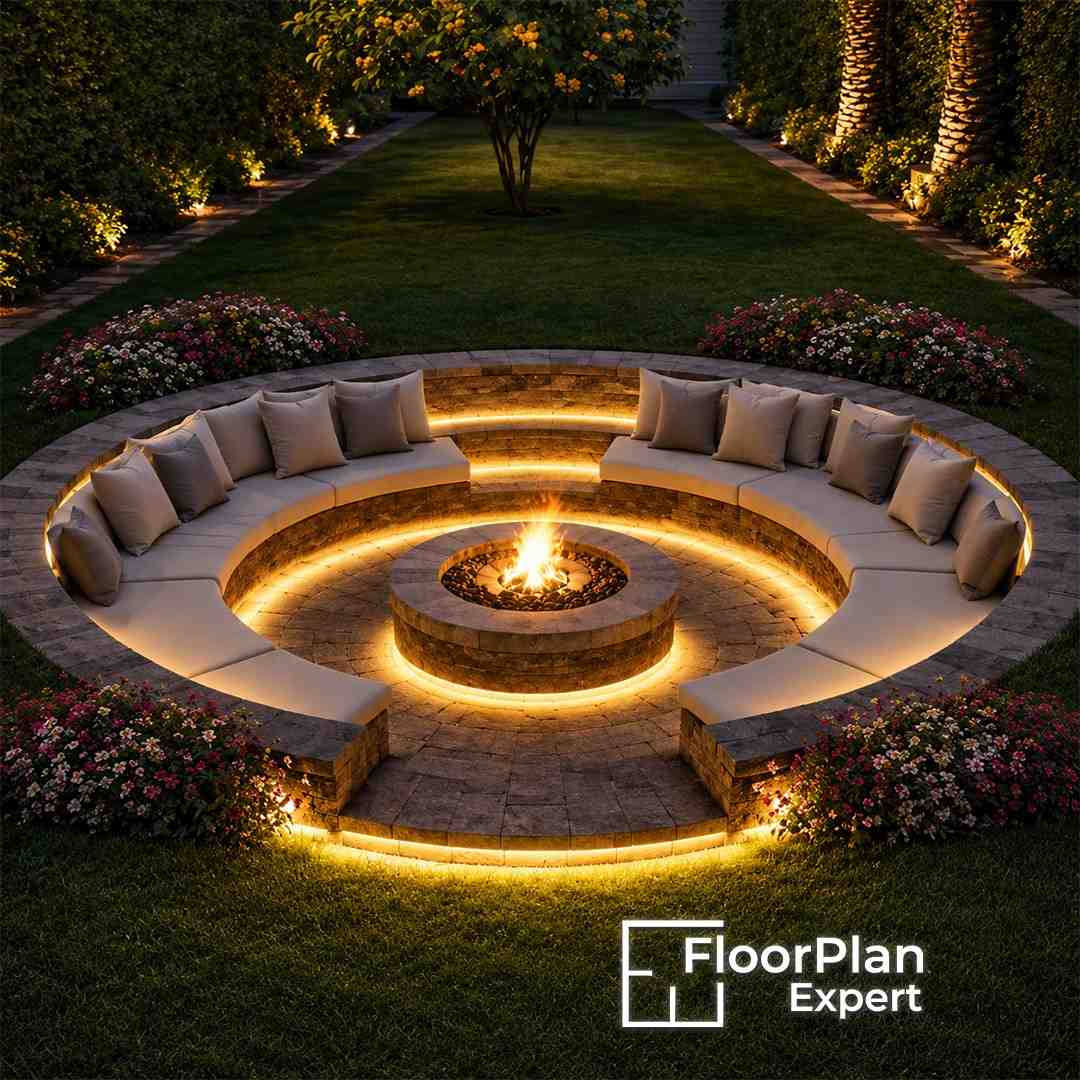
A well-designed garden can quickly lose its character after sunset if the lighting isn’t planned properly. Many homeowners invest in attractive patios, planting, and outdoor seating areas, only to find that these spaces become difficult to use once natural light disappears. Without carefully positioned lighting, pathways become harder to navigate, seating areas feel less inviting, and beautifully landscaped features fade into the darkness. Instead of functioning as an extension of the home, the garden becomes an unused outdoor space after dusk.
A beautifully designed garden shouldn’t lose its appeal once daylight fades. However, many outdoor spaces become dull and uninviting after sunset because the lighting hasn’t been planned as carefully as the planting and landscaping. Well-designed lighting does far more than brighten the garden, it enhances textures, highlights key features, creates ambience, and allows you to enjoy your outdoor space well into the evening.
The best garden lighting ideas aren’t about using brighter or more powerful lights. Instead, they focus on layering soft, well-positioned lighting to define pathways, showcase focal points, and create a warm, inviting atmosphere. Whether you have a small courtyard, a patio, or a spacious family garden, thoughtful lighting design can completely transform how your outdoor space looks and feels after dark.
A common mistake in garden lighting is relying on a single bright light to illuminate the entire outdoor space. While it may improve visibility, it often creates an overly harsh appearance, produces strong shadows, and removes the depth that gives a garden its warmth and character.
A powerful overhead floodlight can make a garden feel flat by flooding every area with the same level of brightness. Instead of enhancing textures, plants, and architectural features, it creates glare and reduces contrast, making the space feel more like a functional outdoor area than a relaxing place to unwind.
A more effective approach is to layer multiple, softer light sources throughout the garden. Carefully positioned lighting adds depth, highlights focal points, and creates a warm, inviting atmosphere while allowing individual features to stand out without overpowering the space.
Path and Border Lighting
Well-lit pathways do more than improve safety, they also enhance the overall appearance of a garden. Carefully placed lighting guides people naturally through the outdoor space while creating a sense of flow that makes the landscape feel more open and connected.
Ground-level lighting adds subtle layers that encourage the eye to move through the garden rather than focusing on a single bright light source. This layered effect creates greater depth, helping even smaller gardens appear more spacious and visually interesting.
Some of the most effective garden lighting ideas use low-level fixtures to gently illuminate borders, pathways, and planting beds without overwhelming the overall design.
Path lights should enhance the garden without becoming its main focal point. When positioned at regular intervals and angled downward, they provide safe, comfortable illumination while maintaining a warm and inviting atmosphere.
Some practical ways to use path lighting include:
- Illuminating garden pathways.
- Defining planting borders.
- Highlighting lawn edges.
- Improving visibility after dark.
- Creating a natural flow throughout the garden.
Soft, well-positioned lighting makes it easier to move around the garden while allowing the surrounding landscape to remain the centre of attention.
String and Festoon Lighting
String and festoon lights are one of the easiest ways to transform the atmosphere of an outdoor space. Their warm, gentle glow creates a welcoming setting that’s perfect for both relaxing evenings and entertaining friends and family, adding character without the need for extensive installation.
Among the most effective outdoor lighting ideas for backyard spaces, festoon lighting delivers an instant visual impact with minimal effort. Suspended between fences, pergolas, trees, or posts, these lights add warmth and help define seating and entertaining areas, making the garden feel more inviting after dark.
They work particularly well in:
- Patio dining areas
- Pergolas
- Garden rooms
- Courtyards
- Outdoor entertaining spaces
Because they combine decorative appeal with practical lighting, festoon lights can completely change the look and feel of a garden in a short amount of time.
The way festoon lights are hung has a significant effect on the atmosphere they create. Installing them higher above the ground gives the space a more open and airy feel, while lower draping creates a cosy, enclosed setting that’s ideal for relaxing or entertaining.
Rather than hanging the lights in perfectly straight lines, using gentle curves or soft swags creates a more natural and relaxed appearance that blends beautifully with surrounding plants, pergolas, and outdoor furniture.
Spotlighting Trees and Focal Points
Every garden benefits from having a focal point, especially after sunset. Rather than lighting every feature with the same intensity, carefully placed spotlights draw attention to selected areas, creating depth, contrast, and a more visually engaging outdoor space.
A mature tree can become one of the most striking features in a garden when illuminated from below. Soft uplighting highlights the texture of the trunk, branches, and canopy, while the shadows it creates add depth and character to the surrounding landscape.
In many cases, a single well-positioned spotlight creates a stronger visual impact than several bright lights scattered throughout the garden, making the overall lighting scheme feel more balanced and intentional.
Professional landscape design plans rarely aim to illuminate every element equally. Instead, they use selective lighting to establish a clear visual hierarchy, directing attention towards standout features such as specimen trees, sculptures, feature walls, architectural planting, or water features.
This layered lighting approach creates a greater sense of depth, prevents the garden from feeling visually cluttered, and gives the outdoor space a more structured and refined appearance after dark.
The colour temperature of outdoor lighting has a noticeable effect on how plants and landscaping appear during the evening. Warm white lighting produces a softer, more natural glow that complements timber, stone, and foliage, while cooler white lighting can make greenery appear flatter and less vibrant.
Selecting the appropriate colour temperature helps preserve the natural appearance of the planting while creating a warm, comfortable atmosphere that’s ideal for relaxing and enjoying the garden after sunset.
Deck and Patio Lighting
Patios and decking are often the most frequently used areas of a garden after dark, making a well-planned lighting scheme essential. Rather than simply making the space brighter, the aim is to create an outdoor environment that feels welcoming, practical, and visually balanced for both everyday use and evening entertaining.
Lighting that is built into decking steps, handrails, or seating offers greater durability than surface-mounted fixtures because it is better protected from weather exposure and accidental knocks. It also provides a cleaner, more refined appearance by keeping the fittings discreetly hidden during daylight hours.
Integrated lighting reduces visual clutter while delivering subtle illumination exactly where it’s needed, improving both safety and the overall appearance of the space.
The most effective outdoor lighting ideas for backyard spaces combine decorative lighting with practical illumination, creating a garden that is both functional and inviting after sunset.
A well-balanced patio lighting scheme often includes:
- Step lighting to improve safety.
- Soft lighting around seating areas.
- Accent lighting to highlight planting.
- Decorative string or festoon lights.
- Subtle illumination around outdoor dining spaces.
Layering these different lighting elements creates a comfortable outdoor setting that works equally well for relaxing evenings, family gatherings, and entertaining guests while maintaining a warm and welcoming atmosphere.
Wall Lighting and Lanterns
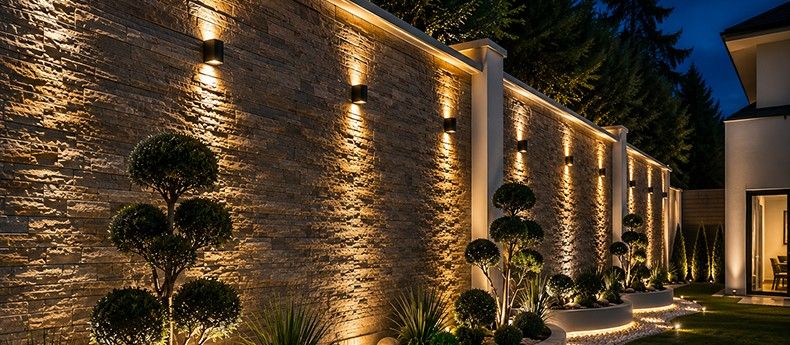
Wall lighting is one of the most effective ways to make a garden feel like a natural continuation of your home. Rather than treating the outdoor area as a separate space, thoughtfully positioned wall lights create a smooth transition between indoor and outdoor living, allowing the garden to remain inviting long after sunset.
Large sliding and bi-fold doors are a defining feature of modern backyard design, but without carefully planned lighting, the connection between the house and garden can disappear once it gets dark. Wall-mounted lights and lanterns help preserve this link by gently illuminating patios, seating areas, and exterior walls, creating a warm and welcoming atmosphere.
Instead of overpowering the space with excessive brightness, they provide subtle background lighting that enhances the home’s architecture. Decorative lanterns also add personality and complement the overall garden style, whether the design is contemporary, traditional, or somewhere in between.
Wall lighting works particularly well for:
- Outdoor dining areas.
- Garden entrances.
- Patios adjoining the house.
- Feature brick or rendered walls.
- Covered seating spaces.
When combined with ground-level and accent lighting, wall-mounted fixtures create a layered lighting scheme that feels balanced, comfortable, and visually appealing without overwhelming the garden.
Water Feature Lighting
Water features naturally draw attention during the day, but with the right lighting they can become even more captivating after dark. Thoughtfully illuminated ponds, fountains, and waterfalls add movement, depth, and atmosphere, turning them into standout features that enhance the garden throughout the evening.
Although underwater lighting is a popular choice, illuminating water from the side often creates a more striking visual effect. Side lighting enhances ripples, reflections, and flowing water while reducing glare, allowing the feature to look more natural and visually balanced.
Among the most effective garden lighting ideas, side-lit water features create depth and visual interest without overpowering the surrounding landscape. Even a small fountain can become a stunning focal point when the lighting is positioned thoughtfully.
For the best results:
- Position lights to minimise direct glare.
- Focus on moving water rather than still surfaces.
- Combine lighting with surrounding plants and landscaping.
- Keep brightness soft for a natural appearance.
- Choose warm white lighting to create a welcoming ambience.
With the right lighting approach, a water feature remains an eye-catching focal point that continues to add beauty, movement, and character to the garden long after the sun has set.
Solar vs Mains - Which Actually Delivers?
Choosing between solar and mains-powered lighting is one of the most important decisions when designing an outdoor lighting scheme. While both options have their own advantages, their performance can vary considerably depending on the season, weather conditions, and how the garden is used throughout the year.
Solar lighting is a popular option because it’s easy to install and doesn’t require electrical wiring, making it ideal for straightforward garden projects. However, during the UK’s shorter winter days and prolonged periods of cloudy weather, solar panels often receive less sunlight, which can reduce charging efficiency and lead to dimmer lighting or shorter operating times.
For decorative lighting in spring and summer, solar fixtures can perform well. However, when used for pathways, seating areas, or security lighting, homeowners may notice less reliable performance during the colder months when daylight is limited.
Professional landscape design plans often recommend mains-powered lighting because it provides dependable illumination throughout the year, regardless of seasonal weather conditions. It delivers consistent brightness, supports a wider variety of lighting fixtures, and offers greater flexibility when designing larger or more complex outdoor spaces.
Some of the main advantages of mains-powered lighting include:
- Reliable performance throughout the year.
- Brighter and more consistent illumination.
- Greater flexibility for larger garden layouts.
- Integration with smart controls and timer systems.
- Long-lasting and dependable lighting solutions.
Although installing mains-powered lighting requires more planning and professional installation, it usually provides a more reliable long-term solution for gardens that are designed to be enjoyed in every season.
How to Layer Garden Lighting Professionally
Professional garden lighting schemes rarely depend on a single type of light. Instead, they combine different layers of illumination to add depth, improve functionality, and create a balanced outdoor environment. By using a variety of lighting techniques, the garden becomes more visually appealing while remaining practical and inviting after dark.
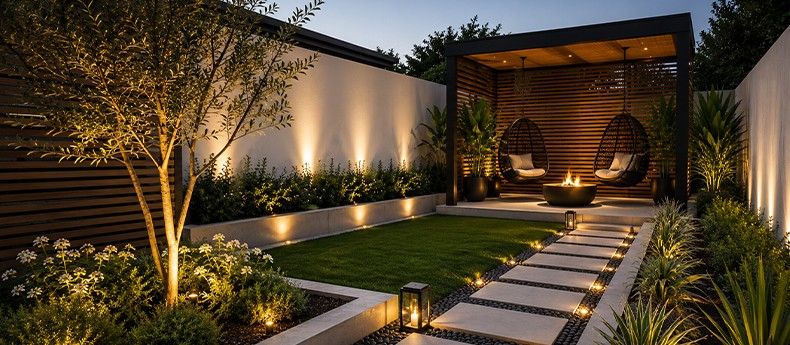
The most effective outdoor lighting designs are built around three essential layers, each serving a different purpose while working together to create a cohesive look.
These layers include:
- Ambient lighting to provide overall illumination.
- Task lighting for pathways, steps, seating areas, and other functional spaces.
- Accent lighting to showcase trees, planting, architectural details, and focal points.
When these lighting layers are combined, the garden becomes easier to navigate while maintaining a warm and relaxing atmosphere. Rather than illuminating every corner with the same intensity, layered lighting guides the eye naturally through the landscape and helps define different outdoor zones.
The best lighting results are achieved when lighting is incorporated into the overall garden design from the very beginning instead of being added after the landscaping has been completed. Including lighting within landscape design plans allows the positioning of fixtures, wiring, and planting to be coordinated, resulting in a cleaner, more effective installation.
Planning lighting early also makes it easier to:
- Conceal cables, transformers, and electrical connections.
- Position lighting before patios and paving are installed.
- Highlight important landscape and architectural features.
- Avoid unnecessary installation costs and future alterations.
- Create a balanced lighting scheme across the entire garden.
By integrating lighting into the design process from the outset, homeowners can create an outdoor space that feels cohesive, functional, and professionally finished while enhancing the garden’s appearance both day and night.
Conclusion
The best garden lighting ideas do much more than brighten an outdoor space—they enhance its character, improve functionality, and highlight the features that make your garden unique. Whether you’re using subtle path lights, festoon lighting above a patio, or carefully positioned spotlights to showcase mature trees, each layer of lighting plays a role in creating a garden that remains beautiful, practical, and inviting long after sunset.
The difference between an ordinary lighting scheme and an exceptional one lies in thoughtful planning. By combining practical outdoor lighting ideas for backyard spaces with carefully developed landscape design plans, homeowners can create a modern backyard design that is warm, welcoming, and enjoyable throughout the year. Rather than simply installing outdoor lights, you’re designing an outdoor living space that continues to look impressive, feel functional, and provide the perfect atmosphere every evening.
FAQs
What are the best garden lighting ideas for a small garden?
Path lighting, wall-mounted lanterns, spotlights for feature plants and festoon lights are all excellent garden lighting ideas for compact outdoor spaces.
Are solar garden lights suitable for UK weather?
Solar lights work well during brighter months but may provide reduced performance during the UK’s shorter, cloudier winter days.
How can I make my backyard feel more inviting at night?
Layering different outdoor lighting ideas for backyard spaces, such as path lights, accent lighting and decorative string lights, creates warmth and depth.
Why should lighting be included in landscape design plans?
Including lighting within landscape design plans ensures fixtures, wiring and focal points are integrated from the beginning, producing a cleaner and more effective result.
What colour temperature works best for garden lighting?
Warm white lighting (around 2700K–3000K) is generally the best choice because it creates a comfortable atmosphere while complementing planting, stone and timber finishes.


