
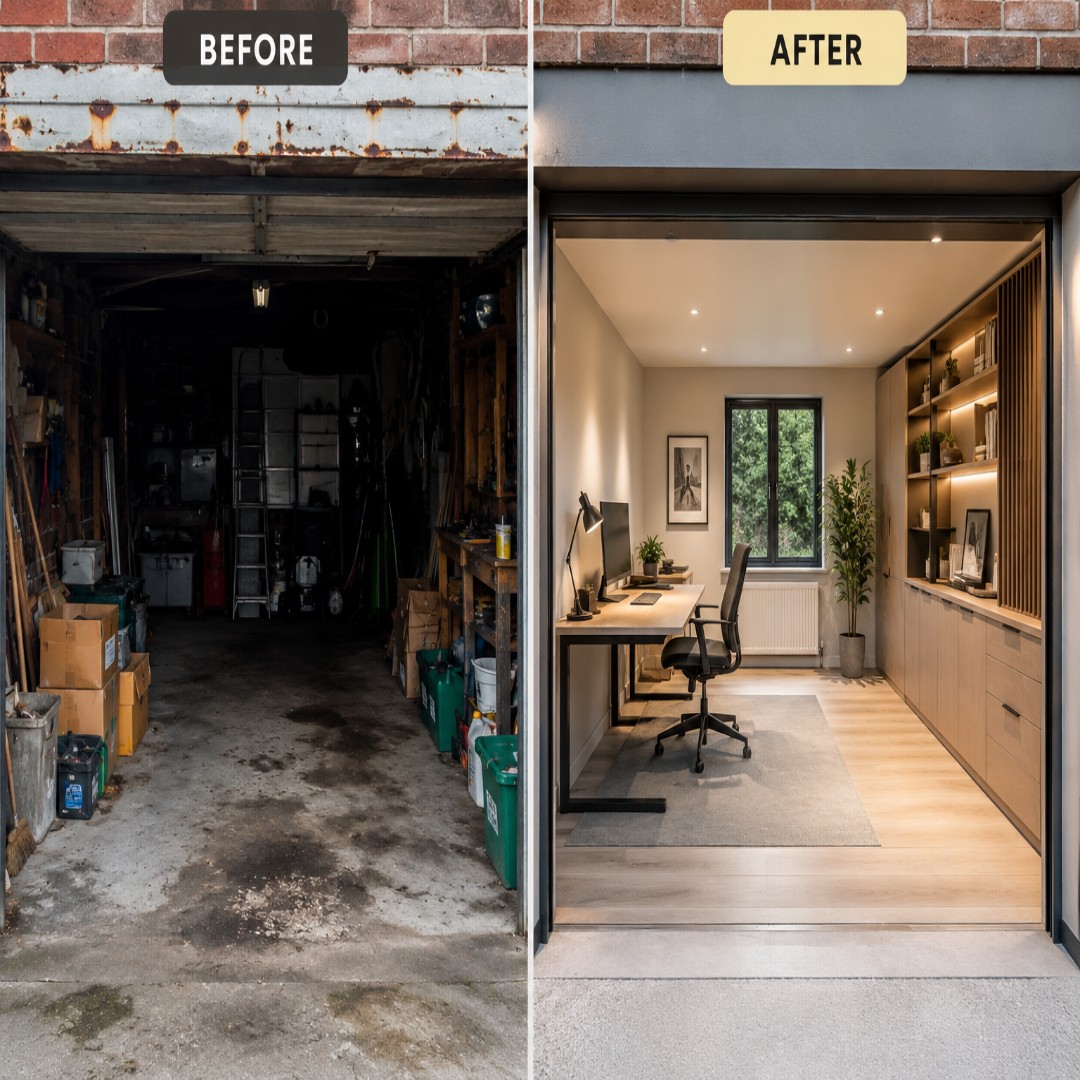
Why small garage conversion ideas deliver more value?
Although every conversion comes with its own budget, transforming an existing garage is generally a more affordable way to gain an extra room. Instead of paying to build from the ground up, your investment goes towards improving and adapting an existing space to meet your needs. The result is a practical room that adds everyday convenience while making better use of your property.
Some of the key advantages include:
- Creates additional living space without reducing your outdoor area.
- Typically requires less construction work than a home extension.
- Makes productive use of an underutilised part of the property.
- Improves the functionality of your home for everyday living.
- Can enhance your home’s appeal to future buyers when planned well.
Is Your Garage Even Worth Converting?
.
It's also important to consider how the conversion will affect your home's practicality. If the garage is rarely used for parking, turning it into a functional living space may offer far greater value. Taking the time to evaluate these factors early helps you plan more effectively, avoid unexpected costs and ensure the conversion is a worthwhile investment.
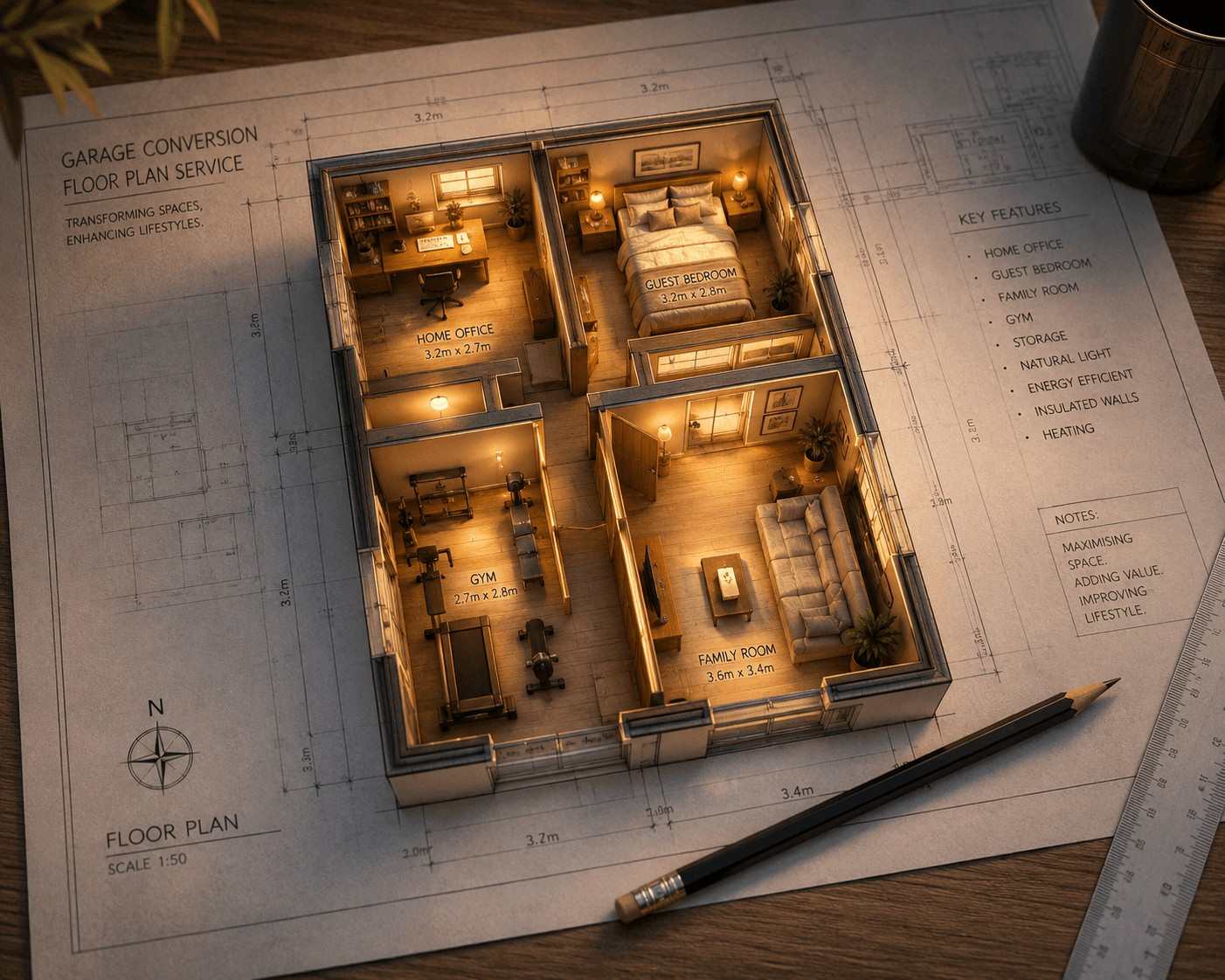
Instead of simply creating technical drawings, a floor plan service evaluates whether the space can comfortably accommodate its intended purpose. During the planning stage, key factors are carefully considered, including:
- Room dimensions and available floor space.
- Ceiling height and structural features.
- Natural light and window placement.
- Electrical and plumbing requirements.
- Heating and insulation needs.
- Furniture positioning and storage options.
- Clear movement throughout the room.
What Garage Conversion Cost UK Looks Like in 2026
The final cost isn't determined by the garage size alone. Factors such as the condition of the existing structure, insulation, electrical and plumbing work, heating requirements, and the quality of interior finishes all play a role in the overall investment.
When comparing quotes, it's important to look beyond the price. A lower estimate may not include essential work like insulation, flooring or plastering, which can lead to additional expenses later. Reviewing what's included from the outset helps you make a more informed decision and avoid unexpected costs during the conversion.
Compared with building a new extension, a garage conversion typically offers several cost-saving advantages, including:
- Less structural work throughout the project.
- Faster completion times.
- Reduced labour and construction costs.
- Minimal disruption to your daily routine.
- Better use of the existing building structure and materials.
While a garage conversion is often more affordable than a home extension, the overall garage conversion cost UK homeowners pay can vary depending on the scope of the project. Several factors influence the final budget, making it important to assess the existing condition of the garage before work begins.
Some of the key cost factors include:
- The overall structural condition of the garage.
- Damp-proofing and moisture protection.
- Floor levelling or raising, where required.
- Roof and wall insulation.
- Heating installation.
- Electrical rewiring or upgrades.
- Plumbing for bathrooms or utility areas.
- Interior finishes and flooring.
- Replacement of windows, doors or the existing garage door.
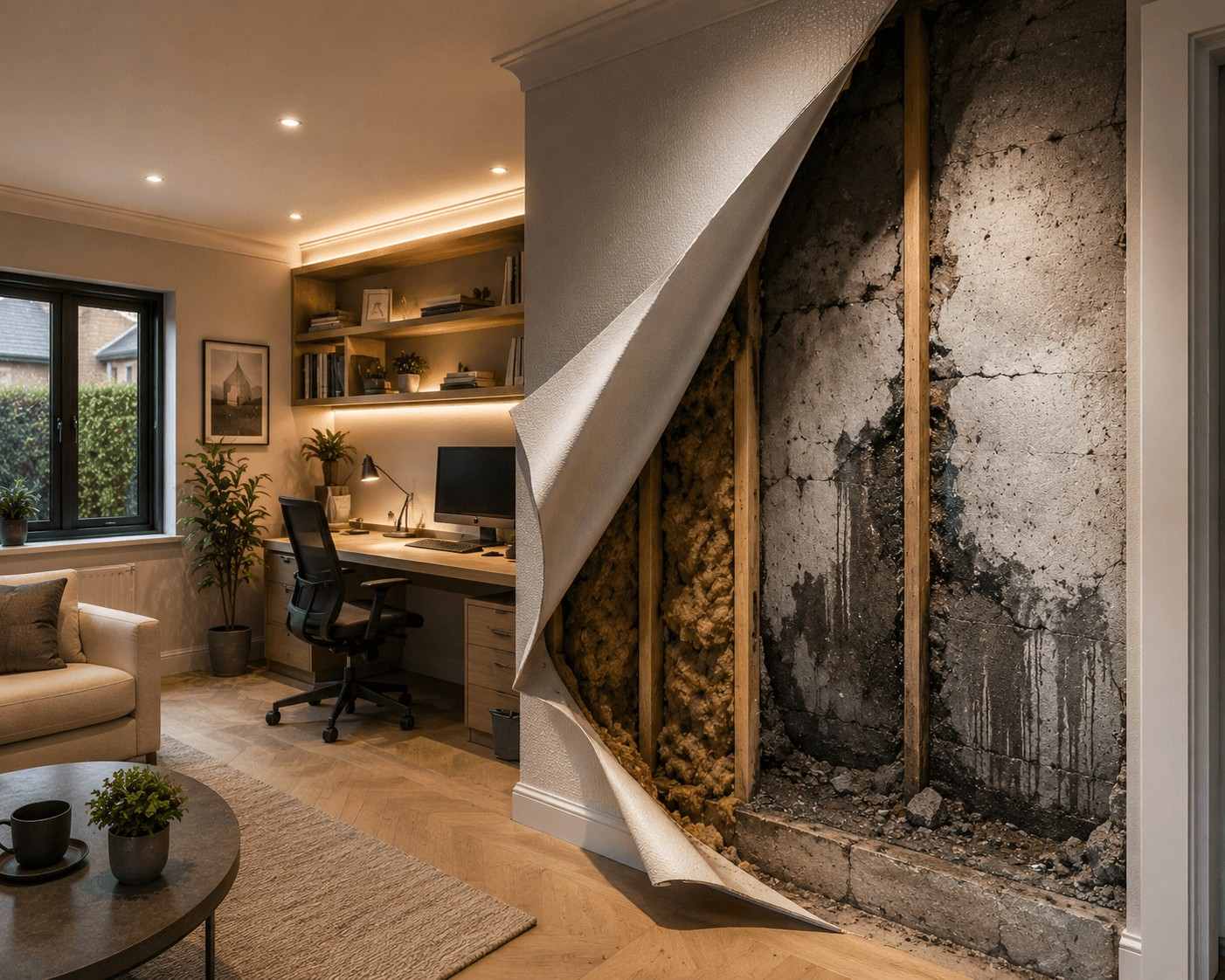
Best Small Garage Conversion Ideas by Room Type
Some of the most popular small garage conversion ideas include:
- Home office
- Guest bedroom
- Children’s playroom
- Reading or relaxation room
- Utility or laundry room
- Home gym
- Hobby or craft studio
- Music room
Ceiling height is another important factor to consider during the planning stage. Garages with higher ceilings often create a greater sense of space, while those with lower headroom benefit from simple layouts, lighter colour schemes and carefully chosen finishes that help the room feel less enclosed.
Choosing a room type that complements these existing features leads to a more practical and comfortable conversion. Instead of trying to recreate a layout designed for a much larger space, working with the garage's natural proportions helps achieve a result that feels balanced, functional and well integrated with the rest of the home.
What a Floor Plan Service Maps Differently Depending on Room Use
A professional floor plan service helps organise the space by considering important design elements such as:
- Furniture layout.
- Comfortable walking space.
- Window placement and natural light.
- Built-in storage opportunities.
- Electrical socket locations.
- Heating arrangements.
- Lighting positions.
Do You Need Planning Permission?
That said, not every garage conversion is covered by the same rules. Homes located in conservation areas, listed buildings or properties with existing planning restrictions may require additional approvals. Similarly, if the project involves replacing the garage door with new walls and windows or making noticeable changes to the front of the property, it's advisable to check with your local planning authority before any work begins.
It's also important to distinguish between Planning Permission and Building Regulations, as they serve different purposes. Even when planning permission isn't required, the conversion must still comply with Building Regulations. These cover essential aspects such as insulation, fire safety, ventilation, structural integrity, drainage and electrical installations, ensuring the new room is safe, energy-efficient and performs to the same standard as the rest of your home.
Even when a conversion is likely to fall under Permitted Development, it’s still important to verify a few key details before work starts:
- Whether your property still benefits from Permitted Development Rights.
- If any previous planning conditions restrict garage conversions.
- Whether replacing the garage door or altering the front elevation requires planning approval.
- Building Regulations approval is needed for the proposed work.
- Whether a Party Wall Agreement is required for neighbouring or adjoining properties.
What Actually Adds Value to a Conversion
The true value of a garage conversion comes from creating a space that blends seamlessly with the rest of the home. Features such as quality insulation, effective damp-proofing, reliable heating and good construction standards help ensure the room is comfortable in every season, energy efficient and built to last with minimal maintenance.
A well-executed conversion should never feel like a repurposed garage. Instead, it should feel like an original part of the home, offering the same level of comfort, functionality and quality as every other living space.
Investing in quality insulation and effective damp proofing offers long-term benefits that extend well beyond the completion of the project. These improvements help create a space that is more comfortable, energy efficient and easier to maintain over time.
Some of the key benefits include:
- Improved energy efficiency.
- Lower heating and energy costs.
- Reduced risk of condensation and damp.
- Better protection for walls, flooring and interior finishes.
- Greater comfort throughout every season.
- A healthier indoor living environment.
Instead of asking, "What's the cheapest way to convert my garage?", it's often better to ask, "Which improvements will still benefit my home in ten years?"
Spending slightly more on quality materials and thoughtful planning usually delivers better long-term value than investing heavily in decorative finishes alone.
The most effective small garage conversion ideas are those that maximise the available space while creating a room that is comfortable, functional and built to last. By understanding the factors that influence garage conversion cost UK, investing in essential upgrades such as insulation and damp proofing, and working with a professional floor plan service, homeowners can make informed decisions that improve both everyday living and the long-term value of their property.
With thoughtful planning from the outset, even a compact garage can be transformed into one of the most practical, comfortable and valuable spaces in your home.
FAQs:
- Is a garage conversion a good investment?
Yes, it can add valuable living space and improve your home’s functionality.
- Do I need planning permission for a garage conversion?
Many conversions fall under Permitted Development, but it’s best to check local regulations.
- What is the average garage conversion cost UK?
Costs vary depending on the size, condition and specification of the conversion.
- What rooms can I create from a small garage?
Popular options include a home office, guest bedroom, gym or playroom.
- Why is a floor plan important before converting a garage?
It helps maximise space, improve functionality and avoid costly design changes later.


