
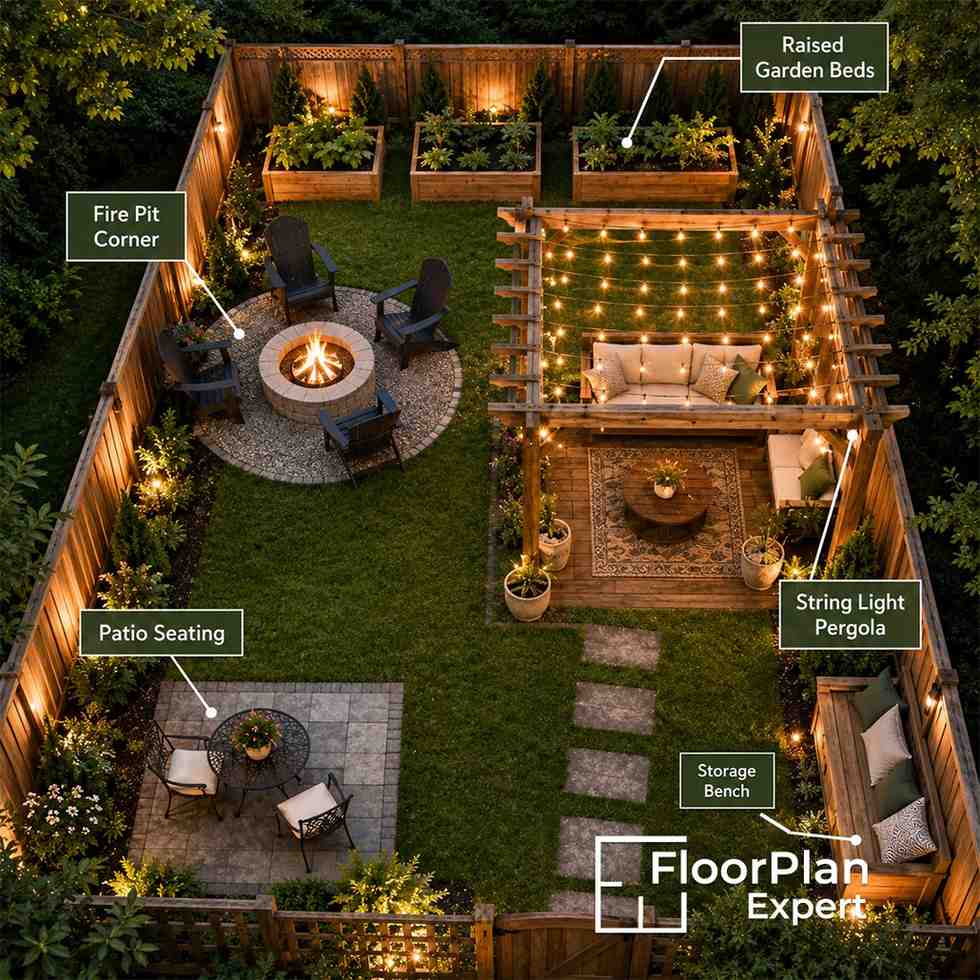
The right patio ideas for small gardens can make narrow layouts feel wider, more balanced, and easier to use. Choosing the right patio position, shape, and materials improves the flow between different garden zones while creating the illusion of extra space. Thoughtful patio design also helps maximise functionality without overwhelming a compact outdoor area.
Long, narrow gardens naturally direct the eye towards the far end of the space, often making the layout feel even narrower than it really is. Every design decision from patio placement to paving patterns has a greater visual effect because the limited width leaves little room to disguise design mistakes.
Unlike wider outdoor spaces, narrow gardens require a carefully balanced approach between hard landscaping, planting, and circulation to achieve a layout that feels both functional and visually open.
Placing the patio in the wrong position often leads to:
- Awkward walking routes.
- Narrow access paths.
- Underutilised garden areas.
- Poor visual balance.
- Limited flexibility for planting and outdoor furniture.
Planning the layout before selecting materials generally creates a far more functional and well-balanced outdoor space.
Where to Position Your Patio
The position of a patio affects how every other area of the garden is used. Whether it is located next to the house, in the centre of the garden, or near the rear boundary, its placement should encourage smooth movement while making the outdoor space feel wider and more connected.
A patio serves as a central feature within the garden layout. When positioned thoughtfully, it creates seamless transitions between seating areas, planting, and pathways rather than disrupting the overall flow.
Good positioning helps:
- Improve circulation.
- Define activity zones.
- Create stronger visual connections.
- Maximise sunlight.
- Make the garden feel more balanced.
Considering these factors from the outset helps minimise the risk of costly layout changes later.
The most effective long narrow garden design ideas draw attention to individual zones rather than the garden’s overall length. Instead, they break the space into smaller, connected areas that encourage gradual exploration rather than revealing the entire layout at once.
This may include:
- Dividing the garden into functional zones.
- Introducing subtle variations in paving.
- Using planting to soften extended sightlines.
- Creating focal points throughout the journey.
These design techniques help the garden appear wider and more visually engaging without reducing the amount of usable outdoor space.
Patio Shape for Narrow Layouts
The shape of a patio plays an important role in determining how spacious a garden feels. Although square and rectangular patios are widely used, they are not always the best choice for long, narrow plots.
Adjusting the patio’s shape can influence how the eye interprets the available space, making the garden feel more balanced and open.
Square patios often highlight the limited width of a narrow garden, causing the surrounding areas to feel even more confined. They may result in awkward planting areas that disrupt the overall garden design.
Potential drawbacks include:
- Strong emphasis on narrow boundaries.
- Less flexible furniture layouts.
- Reduced visual flow.
- Poor integration with pathways.
Choosing a patio shape that complements the garden’s proportions generally results in a more cohesive and visually pleasing layout.
Materials That Make Patios Feel Wider
The paving material you choose influences much more than the overall appearance of the patio. Joint spacing, laying direction, and colour all affect how spacious or confined the area appears.
Selecting materials that complement the overall garden layout helps create a stronger sense of openness.
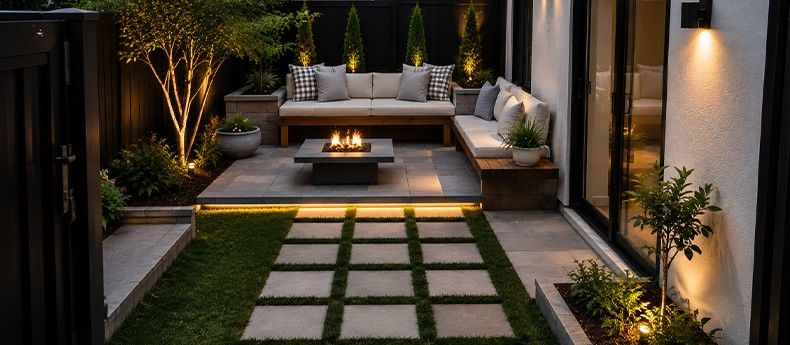
Installing paving slabs across the width of the garden encourages the eye to move sideways instead of towards the far boundary. This straightforward technique creates the impression of a broader garden, even when the actual dimensions remain unchanged.
Other effective material choices include:
- Larger paving units with fewer joints.
- Light-coloured stone.
- Consistent surface finishes.
- Minimal pattern changes.
- Coordinated edging materials.
Together, these design choices minimise visual clutter while making the space feel more open.
The direction in which paving is laid has a greater visual impact than many homeowners realise. Horizontal paving lines help the garden appear wider, while diagonal layouts introduce movement and reduce the appearance of rigid boundaries. These principles help improve the proportions of long, narrow gardens, making them feel more balanced without increasing their size.
Screening Without Losing Space
Privacy is an important consideration, but too much screening can make a narrow garden feel confined. Tall solid fences, dense hedges, and oversized screening panels often reduce the sense of width while also limiting the amount of natural light entering the space.
Instead, screening should be planned to provide privacy while maintaining an open and airy feel.
Large screening features can easily dominate compact gardens because they take up valuable visual space. Even when installed along the boundaries, they often make the patio appear smaller than its actual size.
Common issues include:
- Reduced daylight.
- Enclosed atmosphere.
- Narrower visual proportions.
- Increased maintenance.
- Restricted views.
Professional design my garden approaches integrate privacy into the overall layout rather than treating it as a separate feature. Open trellis panels, layered planting, and carefully positioned screens can provide privacy while avoiding heavy visual barriers.
By incorporating privacy features into the wider landscape design, homeowners can create a patio that feels both secluded and spacious.
Furniture That Actually Fits
The success of a patio depends not only on its size but also on how comfortably the space can be used. In narrow gardens, oversized furniture can quickly dominate the available area, leaving limited room for movement and making the patio feel more confined. Choosing furniture that suits the scale of the garden is often one of the easiest ways to improve both practicality and visual appeal. The best patio ideas for small gardens focus on flexibility, allowing the seating area to adapt to different occasions without permanently taking up valuable floor space.
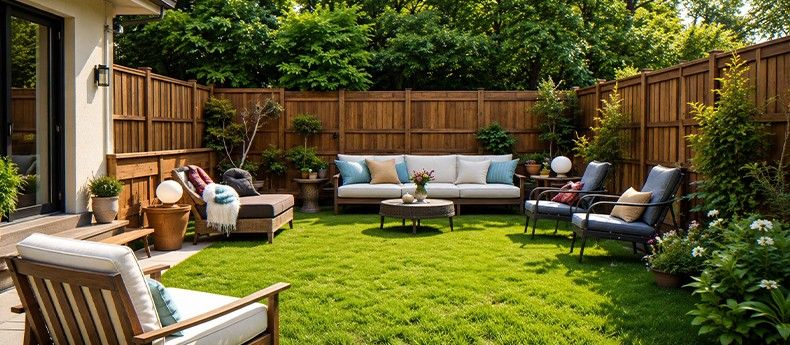
Large outdoor sofas and bulky dining sets may look appealing in showrooms, but they can easily overwhelm narrow patios and reduce the amount of usable space.
Common problems include:
- Restricted walking routes.
- Difficult access to planting beds.
- Limited space for entertaining.
- Poor circulation around tables.
- A patio that feels smaller than it actually is.
Choosing furniture that matches the available space rather than maximising seating capacity usually creates a much more comfortable and functional outdoor environment.
Foldable chairs, extendable tables, and stackable seating give homeowners the flexibility to enjoy a practical patio without sacrificing valuable everyday space. These adaptable furniture options make it easier to transition between dining, relaxing, and gardening while keeping the layout organised and uncluttered.
Furniture with built-in storage can also minimise the need for separate storage units or bulky boxes, helping the patio maintain a cleaner, more spacious appearance.
Planting Without Swallowing the Patio
Planting adds softness to hard landscaping while introducing colour and texture, but in narrow gardens it must be planned carefully. Deep borders and large shrubs can quickly take over valuable patio space, making the seating area feel enclosed and less inviting.
Wide planting beds reduce the amount of practical outdoor space available for seating and movement. Although generous borders can work well in larger gardens, smaller plots usually benefit from a more considered and controlled layout.
When planning borders, consider:
- Keeping widths consistent.
- Choosing plants with upright growth habits.
- Allowing enough space for maintenance.
- Preserving clear walkways.
- Creating seasonal interest without overcrowding.
A well-designed border enhances the patio while helping maintain a balanced and functional layout.
One of the most effective long narrow garden design ideas is to introduce planting vertically instead of spreading it across the ground. Climbers, wall-mounted planters, and trellises bring greenery into the space without reducing the patio’s usable footprint.
Vertical planting also offers additional benefits:
- Softens fences and walls.
- Creates visual height.
- Improves privacy.
- Adds texture throughout the year.
- Keeps valuable floor space free for seating and movement.
This approach allows homeowners to enjoy abundant planting while preserving the open and spacious feel of a compact patio.
Lighting That Opens the Space After Dark
A thoughtfully designed patio should remain enjoyable well beyond sunset. Lighting not only enhances safety but also transforms the atmosphere of the garden during the evening. In narrow layouts, poor lighting choices can draw attention to the limited width, whereas carefully planned lighting can make the space feel larger, brighter, and more inviting.
Overhead lighting can create harsh shadows that accentuate the narrow proportions of the garden. Ground-level lighting, by comparison, softly illuminates pathways, planting, and seating areas without making the space feel visually lower or more enclosed.
Popular options include:
- Recessed paving lights.
- Low bollard lights.
- LED strip lighting beneath seating.
- Step lighting.
- Soft uplighting for feature plants.
Combining multiple light sources creates greater depth while enhancing the overall ambience of the outdoor space.
When homeowners choose to design my garden with lighting included from the very beginning, they create an outdoor space that remains practical and enjoyable throughout the year. Instead of adding lighting as a final detail, incorporating it into the patio layout allows dining, entertaining, and relaxing to continue comfortably after dark.
Well-designed lighting also draws attention to key landscape features while helping the garden feel more open and spacious during the evening.
When Your Garden Needs a Proper Plan
Many patio projects begin with choosing paving materials or outdoor furniture, but these decisions rarely address the real layout challenges. In long, narrow gardens, achieving a successful design depends on understanding how every element works together before any construction starts.
A well-developed plan helps avoid expensive mistakes while creating a patio that feels like a seamless extension of the home.
When homeowners look for ways to design my garden, they often discover that the real issue is not selecting different paving or planting, but improving the overall layout of the space.
A professional layout considers:
- Movement through the garden.
- Patio positioning.
- Planting balance.
- Sunlight patterns.
- Furniture proportions.
- Future maintenance requirements.
Considering these elements together creates a much more cohesive result than adjusting individual features one by one.
The best patio ideas for small gardens are never planned as standalone features. Instead, they are developed as part of a complete landscape design that connects pathways, planting, lighting, and seating into one cohesive outdoor space.
Bringing together thoughtful long narrow garden design ideas with a well-planned approach to design my garden results in an outdoor space that feels wider, more practical, and far more enjoyable to use every day.
Conclusion
Designing a patio for a narrow garden involves much more than selecting attractive paving or space-saving furniture. Every choice from the position of the patio and the direction of the paving to the scale of the planting and the lighting scheme influences how spacious, comfortable, and practical the garden feels. A well-planned layout can turn even the narrowest garden into an inviting outdoor living space without compromising valuable usable space.
Whether you’re exploring patio ideas for small gardens, looking into long narrow garden design ideas, or seeking professional guidance to design my garden, a complete and well-considered approach will always achieve the best outcome. Planning the patio as part of the overall landscape instead of treating it as a standalone feature creates a garden that feels balanced, welcoming, and functional throughout every season.
FAQs
What is the best patio shape for a narrow garden?
Rectangular patios with diagonal or width-focused paving patterns often work best.
How can I make a narrow patio feel larger?
Choose compact furniture, use light-coloured paving, install horizontal paving patterns, introduce vertical planting and avoid bulky screening.
Is vertical planting suitable for long, narrow gardens?
Yes. Vertical planting adds greenery, texture and privacy without reducing floor space, making it one of the most practical long narrow garden design ideas for compact outdoor areas.
What type of lighting works best for narrow patios?
Ground-level lighting, recessed paving lights and subtle uplighting generally create a more open atmosphere than overhead fixtures, helping the patio remain functional and visually spacious after dark.
Should I plan the patio before choosing materials and furniture?
Absolutely. A successful project starts with the overall layout. Understanding movement, sunlight, planting and seating requirements before selecting finishes makes it much easier to design your garden in a way that is attractive, practical and suited to the available space.


