
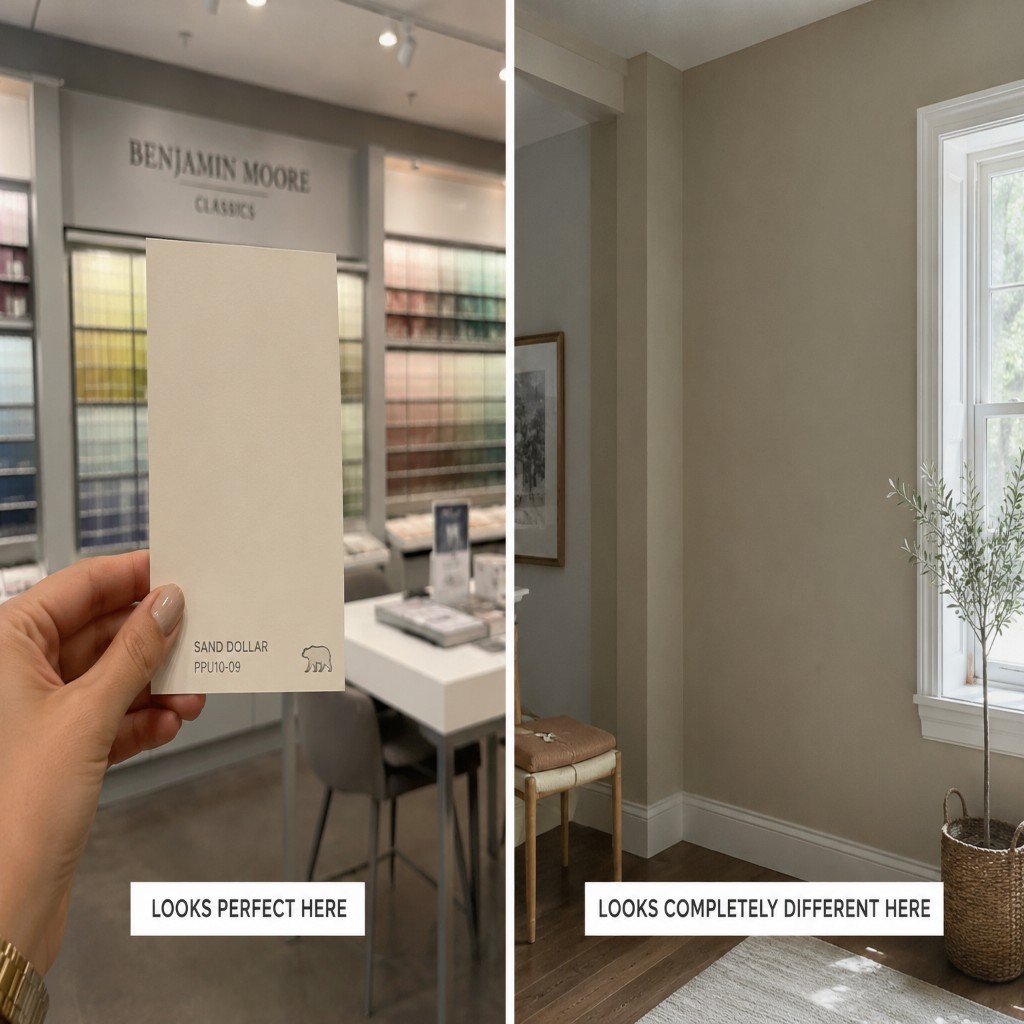
The reason lies in the fact that paint is never viewed in isolation. Its appearance is constantly influenced by factors such as room dimensions, ceiling height, natural daylight, window orientation, surrounding finishes, furniture, and even the way adjoining spaces interact with one another. Rather than being a fixed element, colour changes according to the environment in which it is used.
This is why floor plan services can play a much bigger role in colour selection than many homeowners expect. A thoughtfully designed layout does more than organise rooms, it helps determine how light travels, how spaces connect, and how colours will ultimately be experienced. With the help of 3d floor plan design, homeowners can visualise these spatial relationships before construction begins, making it easier to choose colours that complement the layout and create a cohesive look throughout the home.
Colour Does Not Exist Without Space
For example, a soft beige that feels light and airy in a spacious, sunlit living room may appear noticeably deeper in a narrow hallway with limited natural light. Similarly, the same white paint can look warm and creamy in one room but crisp and cool in another because the lighting and surrounding finishes alter the way the colour is reflected.
Rather than choosing colours in isolation, a more effective approach is to first understand the layout and spatial characteristics of the home. When the architectural design is considered alongside colour selection, it becomes much easier to create interiors that feel balanced, cohesive, and visually comfortable.
What Scientists Discovered About Colour That Homeowners Often Overlook
This explains why a paint colour that looks perfect on a sample card or in a showroom can appear completely different once it is applied throughout a room. Even after careful testing, homeowners are often surprised by the final result because the colour changes in response to the space and lighting around it rather than remaining exactly as it appeared in the sample.
Several factors can influence how a paint colour is perceived, including:
- The amount and direction of natural daylight
- Artificial lighting used during the evening
- Ceiling height and room proportions
- Flooring materials and finishes
- The colours of nearby walls and adjoining spaces
The paint itself remains exactly the same. What changes is the environment around it, which alters the way the colour is reflected and perceived throughout the space.
By visualising colours within a three-dimensional environment, homeowners can evaluate how different shades will look from various perspectives and under changing lighting conditions throughout the day. This reduces uncertainty during the design process and allows more confident decisions based on a realistic preview of the finished interior rather than relying solely on small paint samples or imagination.
The Emotional Geography of Your Home
Selecting colours for individual rooms without considering how they connect to one another can disrupt the overall feel of a home. Even if each space looks attractive on its own, the transition between rooms may feel inconsistent or disconnected. Creating a cohesive colour scheme that follows the natural flow of the floor plan helps establish a more balanced, comfortable, and harmonious living environment.
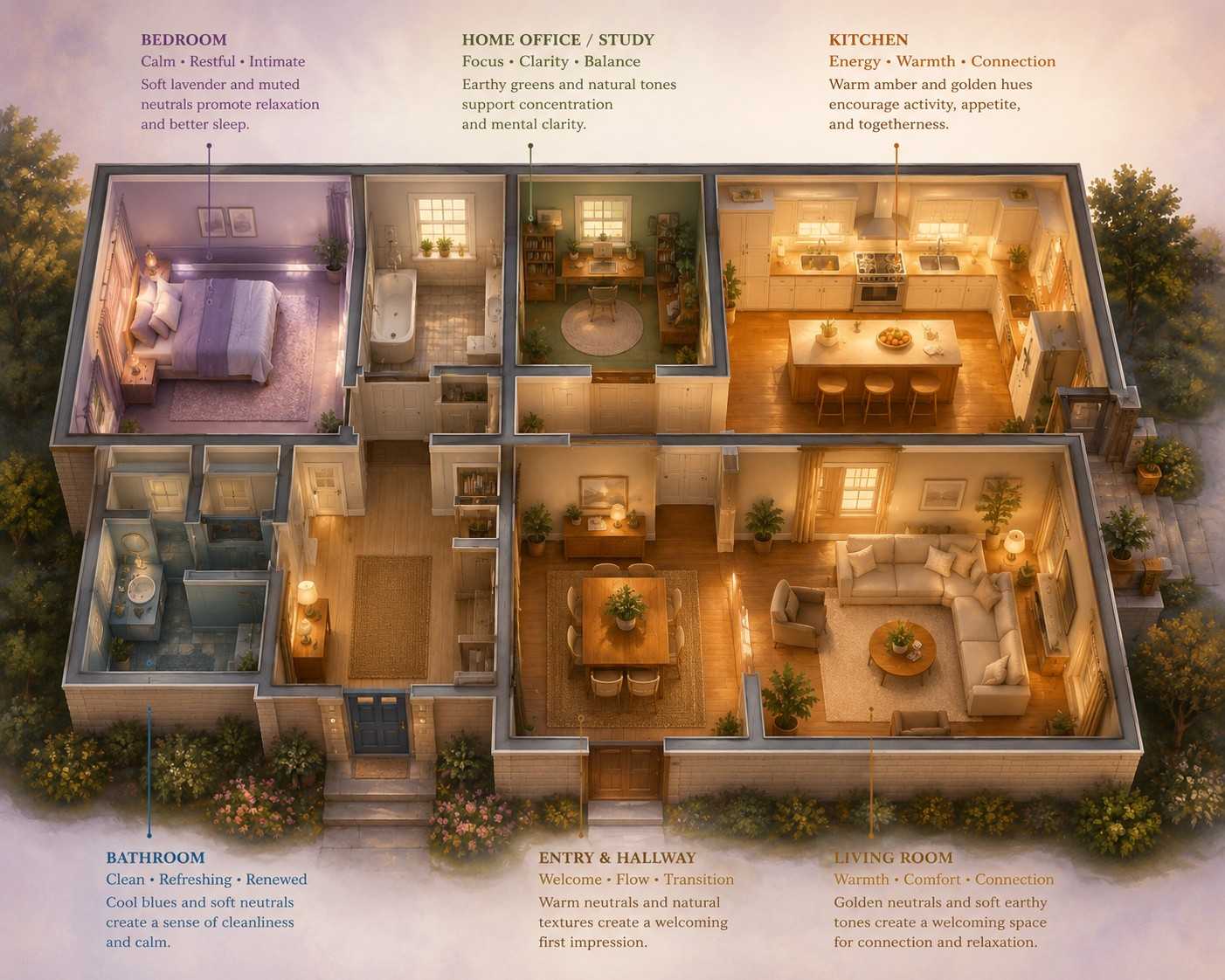
For example:
- Soft, muted colours often help create a calm and restful bedroom.
- Neutral shades can promote focus and reduce distractions in a home office.
- Bright or warm tones can bring energy and vibrancy to kitchens.
- Living rooms generally benefit from colours that feel welcoming and comfortable throughout the day.
Many house extension floor plan ideas focus primarily on creating additional square footage. While increasing space is important, extensions also change how people move through the property.
Without planning visual transitions, homeowners often experience an unexpected disconnect between the original home and the new extension. Colours that work independently may clash emotionally when viewed together during everyday movement through the house.
Successful floor plan services consider these transitions early, allowing colour choices to support a smoother, more unified experience.
Why the Same Colour Feels Different in Every Room
Spatial proportion changes how colours appear long before furniture or decoration enters the room. This is why experienced designers evaluate layouts first and paint selections second.
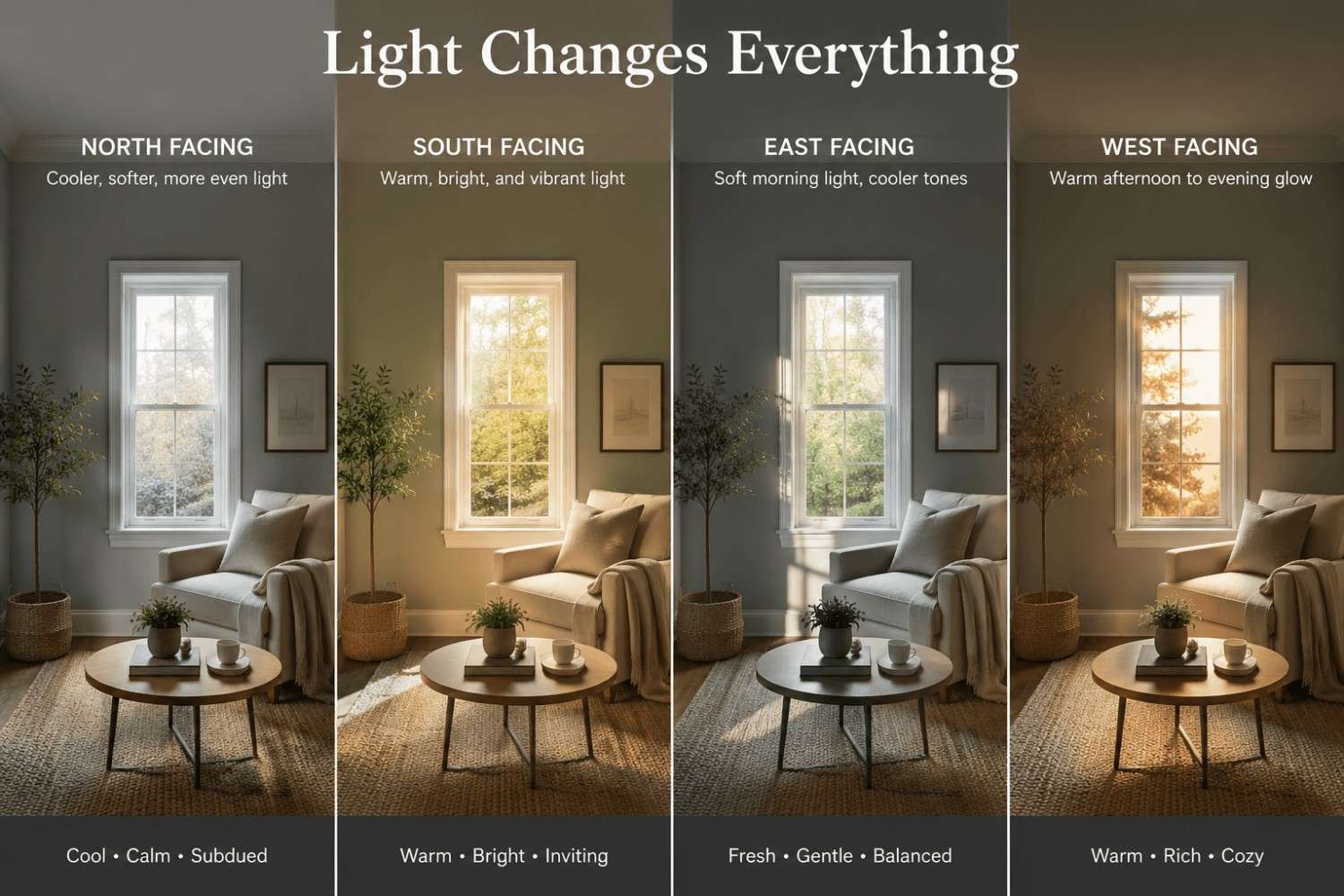
The Colour Temperature Challenge That Starts with the Floor Plan
For example:
- North-facing rooms generally receive cooler light, causing some colours to appear softer or slightly grey.
- South-facing rooms benefit from warmer daylight, often making colours look richer and more vibrant.
- East-facing rooms receive brighter morning light that gradually softens later in the day.
- West-facing rooms tend to appear cooler in the morning before becoming warmer as afternoon sunlight increases.
Professional floor plan services take room orientation into account long before interior finishes are selected. By assessing window positions, the direction of natural light, and the relationship between different spaces, designers can anticipate how colours will behave once the home is complete.
Instead of relying solely on paint samples, this planning process helps homeowners select colours that work harmoniously with the property’s layout and lighting conditions, creating interiors that feel consistent and visually comfortable from morning through evening.
FAQs
- How do floor plan services help with paint colour selection?
They help you understand how your home’s layout and lighting affect paint colours before decorating. - Why does the same paint colour look different in each room?
Room size, natural light, and surrounding finishes can change how a paint colour appears.
- How does 3D floor plan design improve colour decisions?
It provides a realistic preview of how colours will look throughout your home before work begins. - Does room orientation affect paint colours?
Yes. The direction a room faces changes the natural light, which influences how colours are seen. - Why should I consider my floor plan before choosing paint colours?
A well-planned layout helps create a balanced and cohesive colour scheme across every room.


